

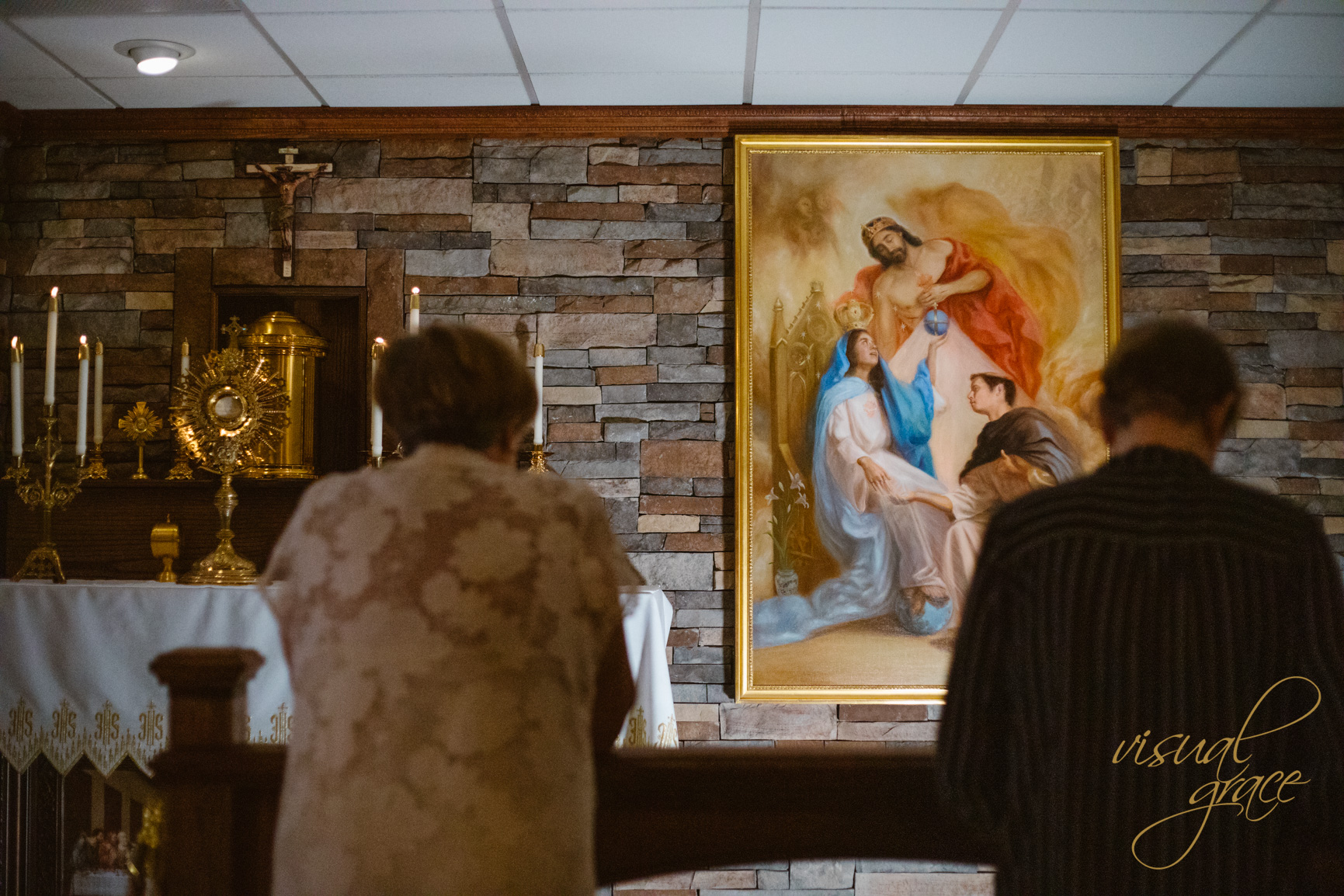


Sacred art should be made by human hands.
More and more churches are hanging AI ‘art’ up in their churches. But this has not been without backlash. Many artists and beauty enthusiasts are concerned. They say it is important to keep AI out of Sanctuaries and here is why I agree.
A sacred image should do more than look beautiful, it should help lead us toward God. Sacred art is meant to be made by human hands. You may ask, but isn’t AI just a tool? I love what our Pope Leo has shared about the topic. He says, “There is an ontological difference — even before an aesthetic one — between art and what a machine can generate through statistical calculation based on millions of images created by others. Algorithms lack the spark of the human, whereas ‘authentic culture and art preserve this spark.” Some are using AI simply as one part of their creation. But to hand over the entire process to a machine is a problem. Especially when it comes to the art within our Church walls. We lose key components when a machine ‘creates’ the images meant to shape our prayer. Components that are vital to our faith.
Sacred Art does more than Decorate
When was the last time you paused to take in something beautiful? A flower, a face, an image, a work of God’s creation… Beauty stops us in our tracks and calls our attention to something purposeful. It reminds us that this life is not our final end, that heaven is real. This is what Sacred Art is designed to do.
Sacred art does much more than decorate the walls, halls, and ceilings of our Parishes. Art serves as visual homily to help guide hearts closer to Christ. They assist the faithful in encountering the mysteries of the faith. Some things are better understood through visuals. They stir stagnant hearts, quiet troubled minds, and move us closer to the mystery itself. Even when the church is quite and someone steps inside, the art is sharing the faith! We must be intentional about what type of art comes into our Churches and which should not.
Artists train to create works that are aligned with the faith and appropriate for our spaces of worship. Not all art fits into this category. It must be theologically sound not just pretty to look at – otherwise, it risks speaking heresy.
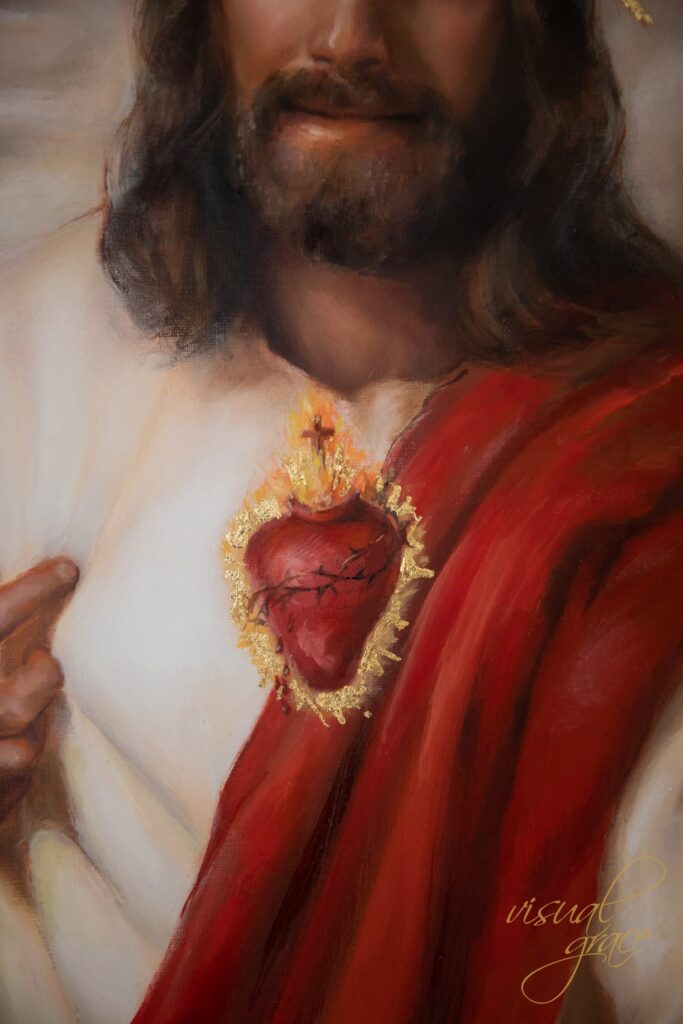
Every detail within Sacred Art is telling the viewer something important about our faith. It is not arbitrary fluff. A flower, an animal, the Sacred Heart, even colors are all pointing us deeper into the truths of our faith.
Artists are raising up their Concerns
Artists are concerned when they see AI in Sanctuaries because a machine is unable to be thoughtful. Symbolism is language of it’s own that requires prayer and discernment when being created. If shared incorrectly, there is a danger of speaking lies about the faith.
Sadly, many ai created images are walking the line of heresy. AI images are often adding random details and even very incorrect symbols to a work. For example, I have seen very confusing ‘Sacred Hearts’ that leave out the crown of thorns and add something extremely unclear. This may seem small but that removal erases a profound declaration of our Faith that Jesus’s heart has suffered for us!
The Human Artist Matters
The Second Vatican Council describes artists who serve the Church as participating in a “sacred imitation” of God the Creator.
Their work is intended for worship, to edify the faithful, and to foster piety and religious formation. The Council also calls for artists to be formed in the spirit of sacred art and liturgy.
–Sacrosanctum Concilium, Chapter VII (Sacred Art and Sacred Furnishings), Paragraph 127
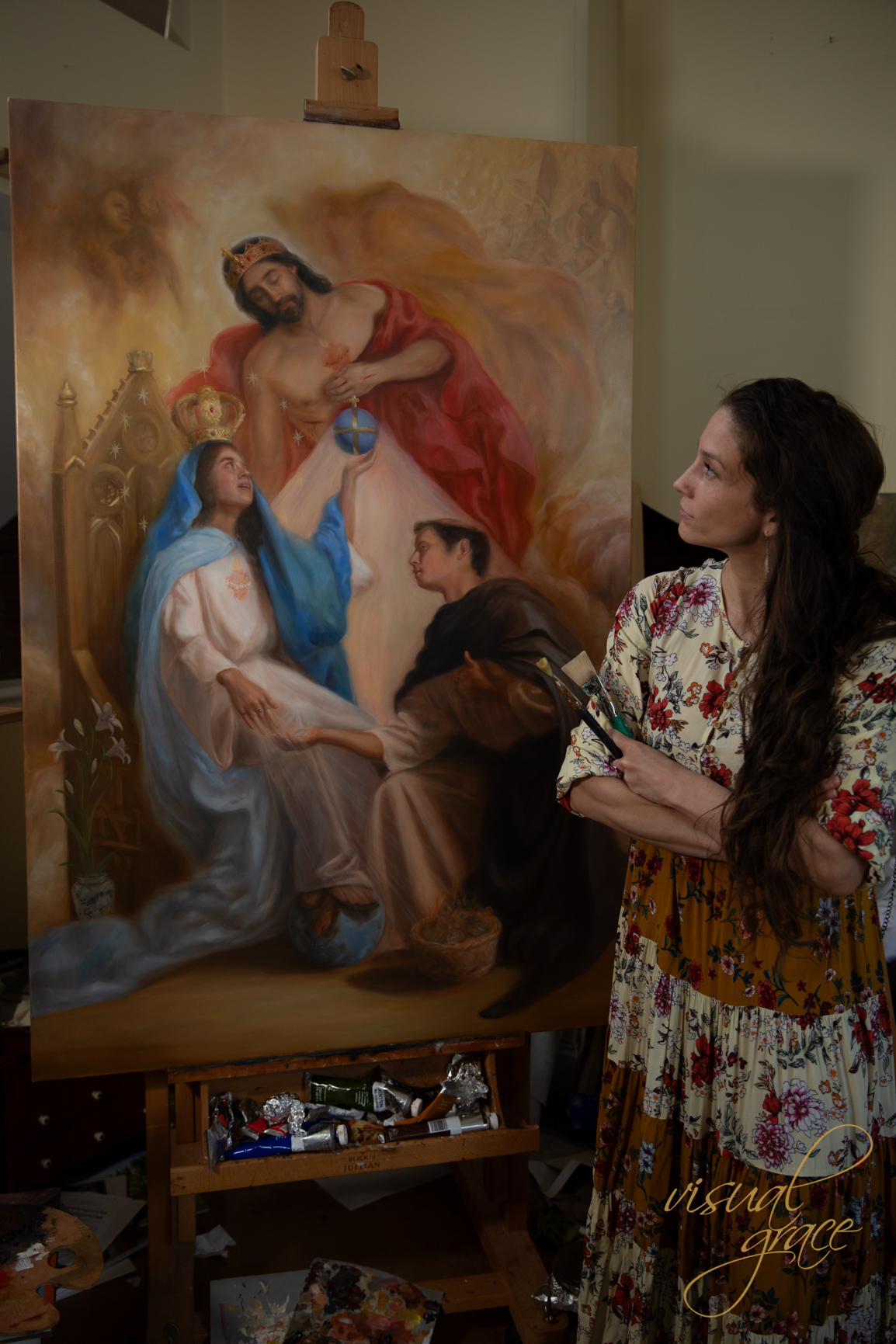
Sacred art is more than just the appearance of a finished image. It involves a human maker using gifts, judgment, skill, and purpose in service of worship. They have studied their craft and the faith. Artist, Kate Capato, shares, “Every time I create a work for a church, I am constantly praying.” A machine cannot pray. This is a fact. Each work created by a human is co-created with the Lord. Their soul calls out to the Lord throughout the entire process.
As the Second Vatican Council reminds us, these arts, by their very nature, are oriented toward the infinite beauty of God. They attempt in some way to portray by the work of human hands. Sacrosanctum Concilium (Constitution on the Sacred Liturgy), Second Vatican Council (Promulgated by Pope Paul VI)
Human hands. Human hearts. If Artificial Intelligence is just that, “Artificial” then surely nothing comes close to what God can do with not just our hands, but our humanity itself.
Imagine what the Future Holds
Take a minute to remember what it was like to walk into a church and feel the power of beauty. Maybe you have been in Rome where beautiful churches are at every corner. Recall those moments. What did do for your heart? It is likely hard to put into words, but you encountered the Lord.
Now imagine seeing a church filled with AI images years from now. At first glance you may find it attractive but then you notice, the unclear messages, the rosary with missing beads. Something that honestly just feels like eating too much cotton candy. Not to mention how easily it would be to throw all those images out given their cheap quality. Jesus deserves the best!! This is not what our future generations should have either.
Sure, AI can produce images that look beautiful, but sacred art must do more than look impressive. It should express the faith and usher people into a place of prayer.
We must ask the hard questions.
We must raise questions about AI generated images used in the sanctuary. Like, who is actually responsible for the prompting the image, were they of the faith?
Where did the machine pull it’s info from to create it? AI regularly steals artists works. It is not for inspiration. It actually steals. There is a difference and having stolen work in our churches should not be ok.
AI may be growing stronger and more intelligent by the day, but in the end, it can only go so far to mimic the human experience. Go calls human beings, made in His image to bring the beauty of the Lord forward in what we create. He wants each of us to play our part. We are the Body of Christ. We must not hand things over to a machine simply because it may feel easier.
Artists are now voicing their concern because AI art is being brought into churches. Our Future generations are counting on us to preserve lasting beauty. One of the best things we can do is support human artists in our churches who are protecting this mission of keeping sanctuaries sacred, holy, human, and real.
Find FULLY HUMAN made works for your sanctuary here!
EWTN featured this topic on their recent news! Watch below to hear more from artists on their concern!
What might be lost when AI creates images meant to inspire prayer? Let us know in the comments below!

Kate Capato
Kate is a Sacred Art Painter, Inspirational Speaker, and Faith-filled Movement artist on a mission to spread God's love through beauty! Her inspiration comes from prayerful encounters with the Lord, and the rich traditions of our Catholic faith. When she's not creating something faith inspired, Kate is often traveling all over the world with her hubby soaking in the wonders of God's creation, or spending time with family and friends to live every moment to the fullest. To see her work, visit her portfolio below and share in this mission of spreading truth and goodness.
leave a comment

Did you know… you can preserve your art for generations to come? When you invest in high quality art, you’re gonna wanna make sure that it stays around for years, ideally passing it on to future grandchildren. Right?! Think about all that art still around from the Renaissance. The reason we are able to enjoy […]
Read More

Have you ever had an idea or vision on your heart for a holy image for your church, home, or community but felt discouraged by your budget?
Read More

Many of you have asked me… …which books I recommend, so I have complied together a list below that I hope you find helpful — perfect timing as we are nearing summer! Books that Help You Understand the Faith more Deeply through Beauty: 1. The Word on Fire Bible – The Gospels Word on Fire […]
Read More

Have you ever felt the pain of the past? A feeling of guilt, shame or simply confusion? Maybe you have wished with all your heart that you could change something, but can’t? I have. Typically, these feelings run deep and most others just would not understand your personal hurt as they didn’t experience what you […]
Read More

All work is the sole property of Katelyn Capato and may not be used or reproduced in any way without permission.